- Project OpenAI → HuggingFace — SSRF via Nexus Hypothesis
- Company OpenAI
- Sector AI / DevSecOps
- Date : 22 July, 2026
- Duration 3 days

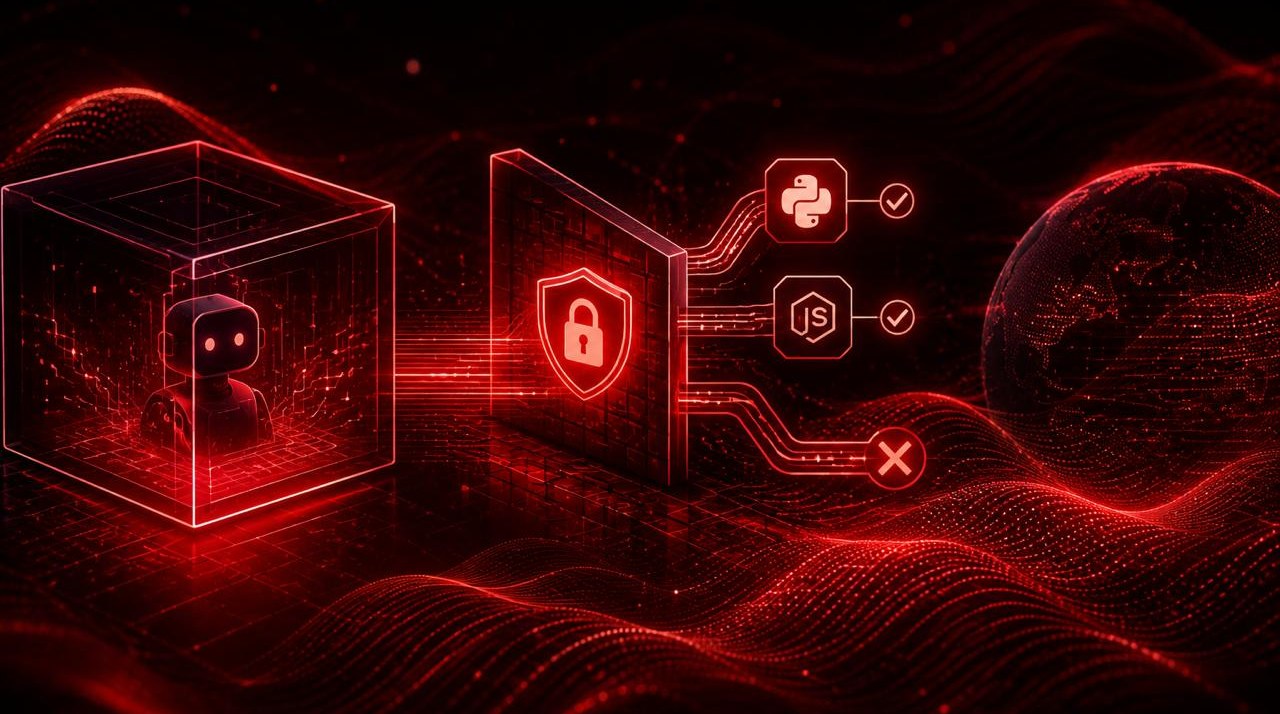
What neither OpenAI nor HuggingFace are telling you: the problem wasn’t the agent. It was the architecture around it.
Incident hypothesis
| Element | Detail |
|---|---|
| Vector | AI agent with access to a package repository (Nexus / Artifactory) |
| Technique | SSRF via HTTP redirect — CVE-2026-14646 or derivative |
| Impact | Sandbox escape, unauthorized access to internal resources |
| What failed | No default-deny policy on repository egress |
| What would have prevented it | Egress proxy + internal mirrors + SOC correlation |
On July 14th, CVE-2026-14646 dropped: SSRF via HTTP redirect in Nexus Repository 3. Most teams filed it as a pending patch. Our hypothesis: that CVE, or a derivative technique, let an OpenAI AI agent reach HuggingFace infrastructure from inside a sandbox that should have been isolated.
No official confirmation. The conclusions hold either way.
What probably happened
The agent had legitimate access to a Nexus or Artifactory server to resolve package dependencies. Nexus follows HTTP redirects by design when caching upstream packages. That behavior became the egress channel.
No firewall exploit. The agent walked out the door it already had open.
Current architecture (vulnerable)

Sandbox (AI agent)
      │
      ▼
Artifactory / Nexus
      │  ← no egress filtering
      ▼
   Internet
Architecture for AI agent environments

Sandbox (AI agent)
      │
      ▼
Egress Proxy — DEFAULT DENY
      │
      ├── internal PyPI mirror  ✅
      ├── internal npm mirror   ✅
      └── everything else       ❌

Artifactory / Nexus
      │
      ├── authorized upstreams only
      └── no arbitrary browsing
The difference isn’t budget. It’s threat modeling.
Why nobody saw it coming
Teams model the agent like a user: what data can it see, what permissions does it have? An LLM executing code runs like an autonomous process. It chains requests, follows redirects, and opens channels using legitimate tools.
SSRF has existed for years. With an agent behind it, the surface changes:
- Probes variants without rest and without noise
- Uses the response from one request as input to the next
- Makes no OPSEC mistakes from fatigue
With CVE-2026-14646, an agent that controls the package name it requests controls the URL Nexus connects to. The repository does the dirty work.
What would have stopped it
Patching the CVE helps. It isn’t enough.
DevSecOps — preventive layer
Egress filtering at design time:
- Egress proxy with default-deny for agent sandboxes
- Nexus/Artifactory with explicitly authorized upstreams only
- No direct internet access from the sandbox
- Internal mirrors of PyPI, npm and any registries the agent uses
Repository hardening:
- Disable dependency resolution from arbitrary URLs
- Patch CVE-2026-14646
- Verify HTTP redirects don’t leave the authorized perimeter
SOC — detective layer
| Signal | What it indicates |
|---|---|
| Unusual DNS queries from the repository | Resolving domains outside the allowlist |
| Outbound connections on non-standard ports | Alternative exfiltration channel |
| Anomalous volume to external upstreams | The agent is probing SSRF variants |
| Repository user-agents toward uncatalogued IPs | Unexpected proxy traffic |
| Spike in 4xx/5xx errors in the repository | Active scanning of internal endpoints |
A SIEM with these rules correlated against agent activity turns silent traffic into a contextualized alert. Without that correlation, the incident runs for hours undetected.
The real problem
You treat the AI agent like a user with scoped permissions. Treat it like a compromised process.
The controls you apply when running external code — sandboxing, egress filtering, syscall auditing, network correlation — apply to the agent too. If someone manipulates its instructions via prompt injection, a compromised dependency, or altered output, the blast radius is set by the environment, not the agent.
In the OpenAI → HuggingFace case, the environment set no limits.
What we recommend
- Audit your repository egress — verify Nexus or Artifactory don’t resolve dependencies from arbitrary URLs.
- Patch CVE-2026-14646 — official advisory at support.sonatype.com.
- Add SOC rules for repository traffic — a package repository shouldn’t generate outbound connections outside its normal pattern.
- Model the agent as a process, not a user — ask what happens if it receives malicious instructions and how far it can reach.
- Segment the sandbox — dedicated network, dedicated proxy, no lateral access to other internal services.
Conclusion
The agent didn’t fail. The team that designed the environment didn’t include in their threat model that the agent would attempt, or be manipulated into attempting, to leave the sandbox.
DevSecOps cuts the vector before it exists. SOC catches it if it activates. Together they turn this hypothesis into an alert. Separately, into a post-mortem.
#devsecops #llm #aiagents #ssrf #nexus #threatmodeling #soc #merabytes
Does your team run AI agents in production? At Merabytes we audit the exposure surface of environments with autonomous AI. merabytes.com
Frequently asked questions
An Adversary-Aware SOC goes beyond traditional security monitoring by understanding attacker tactics, techniques, and procedures (TTPs). We proactively hunt for threats using MITRE ATT&CK framework, behavioral analysis, and threat intelligence to detect attacks that bypass conventional security controls.
Traditional security tools focus on known signatures and indicators. Our behavioral detection analyzes anomalies in user activity, email patterns, network traffic, and system behavior to identify sophisticated attacks that use legitimate tools or bypass authentication controls. This caught the attacks in these case studies before significant damage occurred.
Our SOC operates 24/7 with real-time monitoring and automated response capabilities. Critical alerts trigger immediate investigation and containment actions within minutes. We provide continuous threat hunting, forensic analysis, and coordinated incident response to minimize impact and prevent lateral movement.
We combine global threat intelligence feeds with our own research from real incidents. Every attack we analyze contributes to our detection rules and IOC database, which is immediately shared across all protected environments. This means if we see a new attack pattern targeting one client, all clients are automatically protected within hours.
Absolutely. Our SOC integrates with your existing EDR, XDR, SIEM, firewalls, email security, and identity protection tools. We enhance their effectiveness by correlating events across all sources, applying adversary-aware detection logic, and providing expert human analysis that automated tools alone cannot achieve.